


How to Sell an Unprofitable Store in Sapporo: Steps for Business Succession via Business Transfer and Small-Scale M&A

Among business owners operating restaurants, retail shops, or service businesses in Sapporo, a growing number are finding it difficult to continue operating independently due to prolonged sales slumps, rising labor costs, and surging raw material prices.
When letting go of a business, the first option that often comes to mind is “closing down and demolishing the space.” However, bare-shell demolition work requires millions of yen in expenditures, and it forces owners to abandon the customer base and employee jobs they have built over the years.
In such circumstances, an exit strategy worth serious consideration is “selling an unprofitable store (business transfer / small-scale M&A).” By transferring store operating rights, facilities, and know-how as an ongoing business to a new operator, owners can minimize demolition expenses, mitigate the impact on stakeholders, and make a fresh start.
This article provides an objective perspective on how even an unprofitable business can be acquired and handed over, along with practical procedures and precautions for executing a smooth business transfer in the Sapporo area.
Why You Can Sell an Unprofitable Store in Sapporo: The Path of “Business Succession & Small-Scale M&A” Instead of Closure
Many store owners assume that “no one would ever buy an unprofitable store.” However, looking at the situation from a buyer’s strategic perspective reveals why value can still be found in a struggling business.
Why Struggling Stores Still Attract Buyers: The Asset Value of “Location and Interior Buildouts”
For companies planning new store openings or individuals seeking independent entrepreneurship, searching for raw properties and executing full interior buildouts from scratch demands substantial upfront capital and months of preparation.
Even if current operations are running at a deficit, a store can represent an attractive acquisition target if it possesses elements such as:
- High-traffic prime locations (around Sapporo Station, Odori, Susukino, or near major subway stations)
- High-cost infrastructure that is expensive to install new: exhaust ductwork, commercial plumbing, and full kitchen equipment
- Turnkey interiors that allow incoming operators to launch rapidly through minor remodeling or simple re-branding
From a prospective buyer’s standpoint, if they believe they can turn the business profitable by introducing their own signature menu, operational system, or digital marketing, acquiring the existing space represents a highly rational investment that drastically cuts startup costs and launch timelines.
Differences Between Lease Cancellation and a “Business Transfer (Asset Sale)”
When a tenant unilaterally cancels a commercial lease and vacates, they must pay for bare-shell demolition, leaving nothing of value behind.
In contrast, a “business transfer” (often referred to as an asset or operational rights transfer) is a structure where not only physical assets (interiors, commercial kitchen machinery, fixtures) are handed over, but also intangible business assets—such as store trade names, recipes, operating permit know-how, and existing customer goodwill—can be transferred to a third party with or without compensation.
Legally, unlike stock purchases (mergers and acquisitions that involve universal succession of an entire corporation), a business transfer allows parties to selectively choose which assets and contracts to transfer, enabling flexible succession on an individual store basis.
◇ Reference | Following a legal revision in December 2023, business permits/licenses can now be inherited directly upon business transfer! Please refer to the article below:
Benefits of Retaining Employee Jobs and Preserving Customer Relationships
Demolishing and shuttering a store forces the owner to lay off staff members who have supported the establishment for years.
Through a business transfer, by obtaining the individual consent of employees, their employment agreements can be transitioned (transferred) to the new management, helping to safeguard jobs. Moreover, if the brand name or signature dishes are preserved under the new ownership, the store’s history and relationship with regular patrons can be carried forward without interruption.
Key Valuation Factors and Practical Considerations When Selling an Unprofitable Store
Successfully executing a business transfer for a store running at a loss requires accurately evaluating the establishment’s strengths and managing legal procedures with care.
The Value of Prime Locations and “Heavy Restaurant” Infrastructure in Sapporo & Susukino
In Sapporo, expanding restaurant groups and market newcomers are continually searching for properties equipped with infrastructure capable of handling “heavy restaurant operations” (high-smoke/high-grease cooking):
- Dedicated large-capacity exhaust duct lines routed directly to the building roof
- Built-in grease traps and ample electrical and gas supply capacities
For heavy dining concepts like yakiniku (BBQ), Genghis Khan (mutton BBQ), and ramen, retrofitting utilities later is not only prohibitively expensive, but often strictly prohibited by building codes or structural limits. Possessing a location and buildout that already accommodates heavy restaurant operations serves as a primary valuation asset for prospective buyers.
Analyzing Root Causes of Deficits and Room for Buyer Turnaround
What buyers scrutinize most is “why the store is currently unprofitable.” If the causes are clear and fall within areas the buyer’s resources can resolve, negotiations proceed far more smoothly:
- Mismatch Between Concept and Location
(e.g., operating an upscale dinner-only concept in a business district without capturing lunch demand) - Opportunity Loss from Staffing Shortages
(e.g., high customer demand, but having to restrict seating capacity due to unfilled staff shifts) - Insufficient Web Marketing and Social Media Outreach
(e.g., excellent food and location, but lack of visibility and customer acquisition strategies)
When buyers see clear avenues to pivot concepts or deploy their own human resources and marketing pipelines, the likelihood of a successful turnaround remains high.
Strict Confidentiality to Prevent Premature Staff Resignations
In business sale transactions, preserving strict information confidentiality is essential.
If rumors that “the store is being sold” or “may close soon” leak to employees or commercial suppliers before formal agreements are signed, it can trigger sudden staff departures, deteriorating supplier terms, and customer attrition, severely impairing the business’s valuation.
Therefore, executing a Non-Disclosure Agreement (NDA) at the earliest stage and sharing information incrementally under anonymous profiles is an indispensable industry standard.
Practical Steps to Smoothly Execute a Business Transfer & Succession in Sapporo
Because a business transfer involves the assignment of operational agreements rather than simple goods purchasing, it must be advanced through structured stages.
Step 1: Executing an NDA and Auditing Assets and Contractual Relationships
First, execute an NDA with the advisory brokerage or prospective buyers, followed by a comprehensive audit of the store’s assets and contractual liabilities:
- Profit and loss (P&L) statements for recent fiscal periods and monthly sales trends
- An itemized inventory of kitchen equipment and interior fixtures (owned vs. leased/rented)
- Employee employment contracts, wage schedules, and working conditions
- Commercial terms and contracts with vendors and suppliers
Organizing these documents clarifies which assets and obligations will be subject to transfer.
Step 2: Negotiating Terms with Buyers Who Offer Strategic Synergy
Next, identify prospective buyers capable of maximizing the location and facilities.
Beyond the transfer price itself, detailed operational terms must be aligned into a basic agreement—including whether staff employment conditions can be maintained, target handover dates, and the handling of accounts payable, outstanding liabilities, and security deposits.
Step 3: Executing the Business Transfer Agreement and Securing Landlord Consent
Once terms are aligned, the parties execute a formal Business Transfer Agreement.
At this juncture, securing official consent from the property owner (landlord/building manager) is critical. When handing over the physical premises to a new owner via business transfer, the parties must either obtain landlord consent for a leasehold assignment or mutually terminate the existing lease while having the new operator execute a new lease agreement directly with the landlord.
Handing over the premises without landlord authorization constitutes a lease violation that risks immediate contract termination, making advance coordination and formal consent an essential process.
Strengths of Kukan Real Estate in Supporting Sales and Succession of Struggling Stores
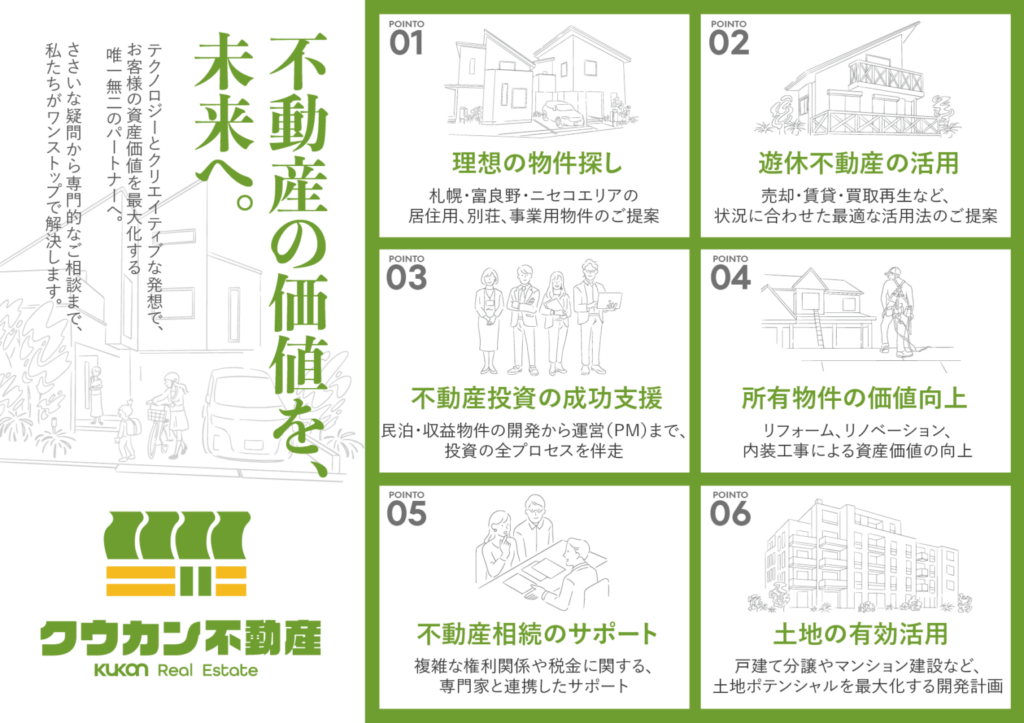
Business succession and transfers for struggling businesses require comprehensive expertise that spans real estate regulations, culinary field operations, and corporate finance.
If you are considering selling a commercial store or reorganizing your business in Sapporo, please consult Kukan Real Estate, well-versed in both restaurant operations and real estate brokerage.
◇ Kukan Real Estate Website
URL: https://kukanhokkaido.co.jp/realestate/
Operational Store Valuations Grounded in Direct Restaurant and Hospitality Experience
Beyond theoretical desktop valuations, Kukan Inc. has directly developed and operated diversified businesses in Sapporo, including restaurants, vacation rentals (minpaku), and real estate brokerage.
Furthermore, because our frontline advisors have served as restaurant managers in demanding environments, we look beyond surface-level financial statements. We accurately assess real operational assets: exhaust duct capacity, kitchen layout efficiencies, and turnaround potential under a concept pivot. By articulating the authentic utility value of your space to buyers, we support favorable succession terms.
Assisting Buyer Financing via Proven Track Records with Financial Institutions
A frequent roadblock in business transfers occurs when an eager buyer candidate is identified, but the deal collapses because they fail loan screenings or landlord background checks.
Kukan Inc. holds established track records in securing commercial financing from regional banks, shinkin banks (credit unions), and the Japan Finance Corporation (JFC). By providing hands-on assistance with bankable business plan preparation and banking interview strategies for prospective buyers, we reduce deal-breaking risks caused by financing failures, ensuring a reliable business handover.
Matching Prospective Founders via Proprietary Social Media and Web Networks
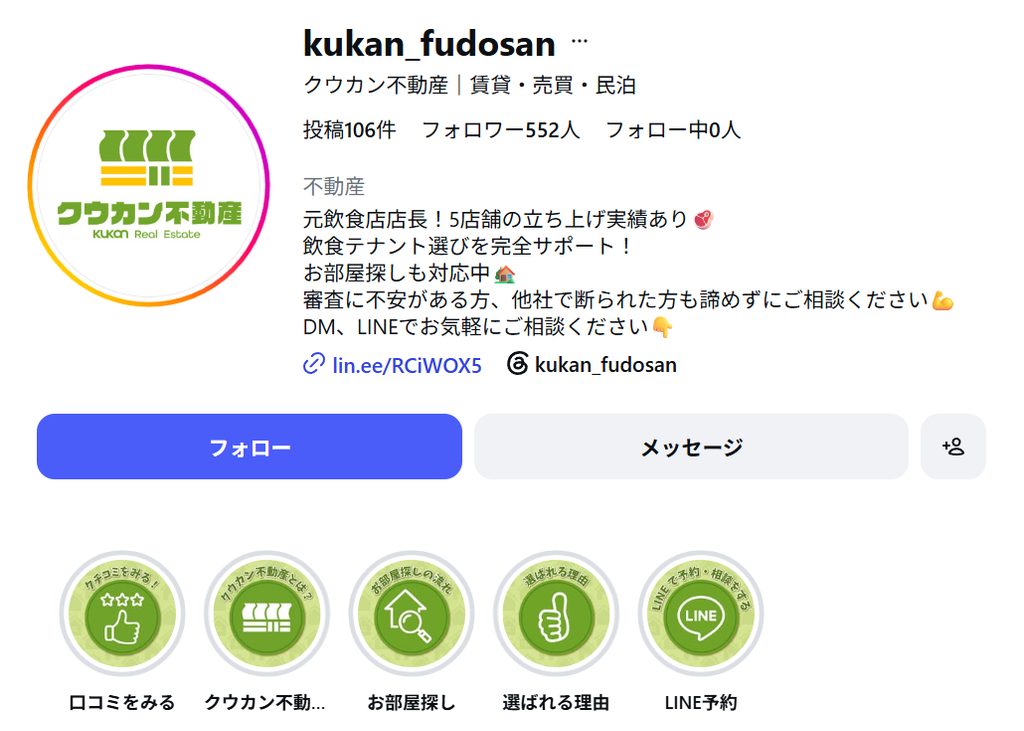
Through specialized restaurant tenant brokerage and startup advisory services, Kukan Real Estate continuously communicates with prospective entrepreneurs, expanding restaurant operators, and corporate investors across Sapporo via proprietary social media channels (such as Instagram) and private networks.
Before publicly listing properties on general portals, we can discreetly approach highly motivated buyers while maintaining confidentiality. Quickly identifying successor candidates prior to submitting formal lease termination notices enables an orderly transition with minimal disruption to ongoing business.
◇ Kukan Real Estate Official Instagram
URL: https://www.instagram.com/kukan_fudosan?utm_source=ig_web_button_share_sheet&stkn=ZDNlZDc0MzIxNw==
Conclusion: Before Giving Up Due to Deficits, Consult Kukan Real Estate
Before assuming that “because the business is running at a loss, the only option is to shut down and pay millions in demolition fees,” exploring business succession and transfer options is well worth the effort.
If a buyer can be found who values your location, facilities, and operational foundation, it is entirely possible to curb exit expenses, protect employee jobs, and move forward toward your next venture.
Kukan Real Estate provides free consultations, asset evaluations, and exit strategy proposals under strict confidentiality. For store owners in Sapporo considering business reorganizations or store transfers, please feel free to reach out to Kukan Real Estate.